
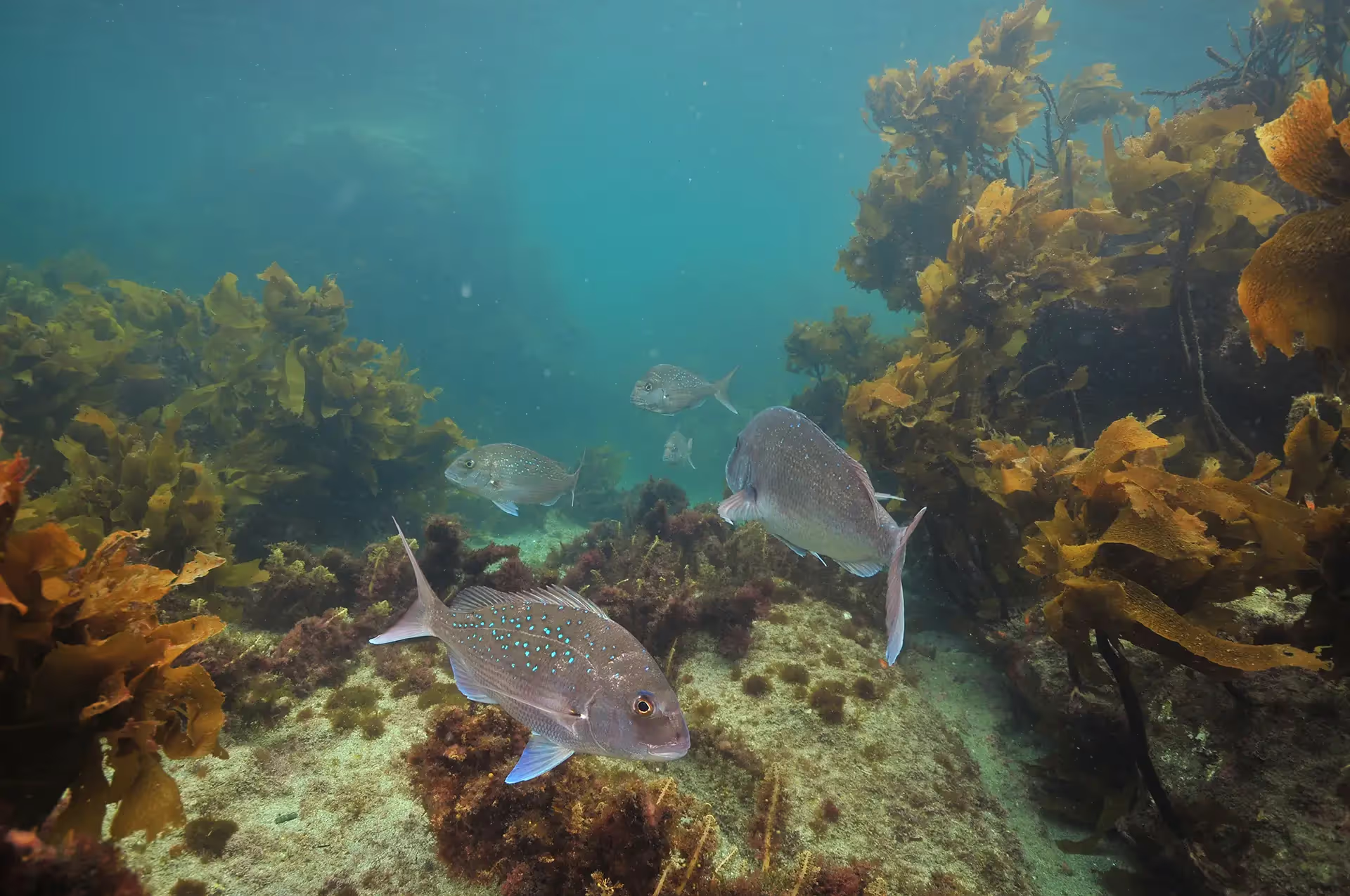
New Zealand is at an environmental and economic crossroads over fisheries. The question is whether bottom trawling should continue. Balance believes that decision must be practical, balanced, and based on evidence from New Zealand and overseas. That is the approach behind our fisheries policy.
We support the Quota Management System, strong monitoring and enforcement, and continued access to fishing for recreational, cultural, and economic purposes. But we also believe there must be limits on how fishing is carried out if we want to protect the future of the industry.
For us, that limit is bottom-contact trawling: dragging weighted nets across the seafloor.
New Zealand’s current rules already acknowledge the problem. MPI says about 31 percent of the Exclusive Economic Zone and only 21 percent of the territorial sea are protected from bottom trawling. That still leaves a large area exposed. DOC has warned of the long-term damage this practice causes to marine habitats and biodiversity. Public concern has also grown in recent months, particularly after proposals advanced by New Zealand First’s Shane Jones.
That does not mean abandoning commercial fishing. The industry provides jobs and contributes to the economy. The real issue is not whether fishing should continue, but whether destructive methods should remain part of its future.
Balance New Zealand’s position is clear. The Quota Management System should remain the backbone of fisheries management, and any changes should be driven by evidence and long-term sustainability. We also support stronger electronic monitoring, vessel tracking, onboard cameras, and independent compliance oversight, because public confidence depends on transparency and proper enforcement.
But monitoring alone is not enough. International practice is moving toward stronger protection for vulnerable marine ecosystems, including deep-sea corals, sponges, and seamount habitats, from bottom-contact fishing. That is not radical. It is a practical recognition that some environments are too fragile to keep damaging.
Ending bottom trawling is not anti-fishing. It is about protecting the future of fishing. It means keeping the quota system, respecting Treaty obligations, supporting coastal communities, and shifting to lower-impact methods that better protect the marine environment the industry depends on. That is the balanced and practical path forward for New Zealand.